Why Cheap Import Trailers Don't Survive the Northern Territory (And What Does)


September 28, 2026

We've all seen them parked on the side of the Stuart Highway: abandoned trailers with buckled frames, snapped drawbars, or axles pointing in directions they shouldn't.

In most parts of Australia, a cheap, mass-produced import trailer is enough to haul garden waste to the local tip once a month. But the Northern Territory is not like most parts of Australia. Our roads, our heat, and the distances we travel put mechanical stress on trailers that off-the-shelf models were never engineered to survive.

If you are buying a trailer for work or play in the NT, here is why cutting corners on a cheap import is a recipe for disaster — and why custom fabrication is the only way to go.

The corrugated road test

Anyone who has driven the Tanami Road, the Plenty Highway, or any unsealed track in the Territory knows about corrugations. These deep, repetitive ridges act like a giant hammer hitting your trailer thousands of times a minute.

This constant vibration is a trailer's absolute worst enemy. It causes a phenomenon called structural fatigue.

Bolt-together vs. fully welded: Most cheap imported trailers are shipped in flat-packs to save on freight and then bolted together locally. Under the relentless shaking of NT corrugations, these bolts rattle loose, holes ovalise, and the entire structure begins to flex and warp. A custom-fabricated trailer from BluedustNT is fully seam-welded using Australian structural steel. There are no bolts to work loose — the entire frame acts as a single, rigid, high-strength unit.

Drawbar length and bracing: Mass-produced trailers often have short, unbraced drawbars made from thin-walled steel to save on manufacturing costs. When you hit a wash-out at speed, the leverage on that drawbar is immense. We fabricate our custom trailers with extended, heavy-duty drawbars that run all the way back to the spring hangers, reinforcing the chassis at its highest stress points.

The steel quality difference

Not all steel is created equal. Cheap imported trailers are often built using thin, low-grade steel that lacks the yield strength required to handle heavy payloads over rough terrain.

When low-grade steel is subjected to the high-load, high-vibration environment of the Territory, it doesn't just bend — it cracks.

At BluedustNT, we use high-tensile, heavy-walled Australian steel for our chassis and frames. We over-engineer our drawbars, frames, and tailgate hinges because we know the conditions they have to face. When you buy custom, you are buying a trailer with a chassis that will easily outlast multiple tow vehicles.

Suspension and axles that actually fit the job

A cheap trailer usually comes with light-duty, multi-leaf slipper springs and thin axles designed for smooth suburban bitumen. Take that setup onto a corrugated dirt road with a load of gravel or building materials, and you'll quickly snap a leaf or bend an axle.

When we design a custom trailer, we select axles, hubs, and suspension systems that are rated well above the trailer's legal aggregate trailer mass (ATM).

Whether you need heavy-duty rocker-roller leaf springs for carrying heavy machinery, or independent coil-spring suspension with heavy-duty shock absorbers for off-road camping, we ensure your trailer's running gear is built to absorb the abuse of NT roads.

Protecting against the elements

If you are in Darwin or the Top End, you have to deal with the wet season. The combination of intense tropical humidity, heavy rain, and coastal salt air will turn a poorly protected steel trailer into a pile of rust within a few seasons.

Many cheap trailers are simply painted with a thin coat of industrial enamel over raw steel. Once a stone chip exposes the metal, rust spreads rapidly under the paint.

We usually blast our custom trailer builds first, then prime and paint them. A variety of finishes is available.

We don't guess — we build to last

When you buy a trailer off the shelf, you are buying a compromise. It is built to a price point, not a standard.

At BluedustNT, we've spent over a decade building steel structures, fencing, and custom trailers that survive the Northern Territory. We understand what works out here because our own gear has to survive the same roads.

Before you buy a cheap trailer, think about where you'll be when it fails. If you want a trailer that gets your gear there and back safely, every single time, custom is the only choice.

Talk to the team at BluedustNT about your next trailer build. [ 08 8952 1851 ](tel:08 8952 1851).

Tell us about your next project!


Interested in joining the BluedustNT team?

SHARE

Latest Posts

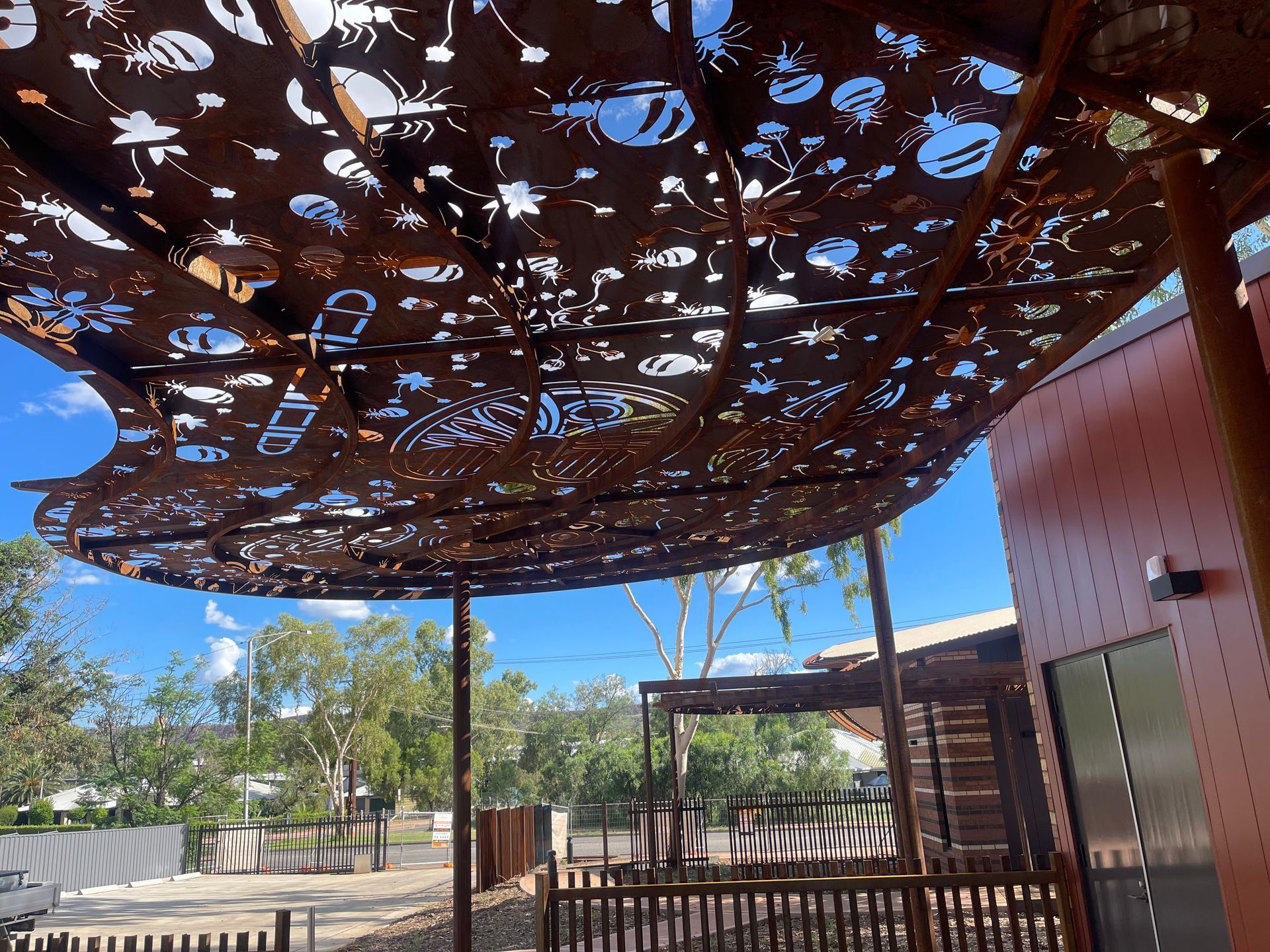
Outdoor patio with a perforated metal shade canopy casting patterned shadows over tables and chairs.
November 8, 2026
Summer in the Northern Territory puts everyday spaces to the test. A driveway feels hotter, an exposed work area becomes harder to use, and a gate that’s been playing up can turn into a daily frustration. Getting ready starts with a practical look at your property. Where would shade make a difference? Are your gates and fencing doing their job? And is there any maintenance you’ve been putting off? Whether you’re looking after a home, business or rural property, here are a few places to start. Make shade work where you need it Think about the spaces you use most during the hotter months. That might be the area where you park your car, unload equipment, take a break or gather with family. A well-planned carport or shade structure can make those areas more useful while helping protect vehicles and equipment from direct sun. Before deciding on a structure, consider: What needs to fit underneath it? Allow for roof racks, trailers, work vehicles and any equipment you regularly move. How do you use the space? Parking, outdoor seating and a working area each need a different layout. Where does the afternoon sun hit? Shade needs to fall where you’ll actually use it. Could your needs change? A little planning now can help accommodate a different vehicle or a growing business later. The right starting point is how the space needs to function each day. Give your gates a check before they become a hassle An automatic gate earns its keep when you’re coming and going in the heat. If yours has become noisy, slow or unreliable, it’s worth arranging a service. Watch for changes such as jerky movement, inconsistent responses from remotes, or a gate that doesn’t open or close as it usually would. These are useful details to pass on when booking an inspection. Keep the surrounding area clear of rubbish and overgrown vegetation, and leave adjustments to motors, electrical components and safety devices to a qualified technician. For businesses and shared properties, planned servicing also gives you an opportunity to review how the gate is used and discuss recurring maintenance. Look at security across the whole property Summer holidays and changes to business hours can mean a property is unattended for longer periods. Before heading away or closing for a break, take a walk around the boundary. Check for damaged fencing, gates that don’t latch properly and access points that need attention. Review who has keys, remotes or access permissions, particularly if staff, tenants or contractors have changed. If you’re considering automatic gates or new fencing, think about everyday access as well as security. Who needs to enter? How often? And what vehicles need to get through? Those answers help shape a solution that suits the property and the people using it. Plan improvements before the calendar fills up Start with the issues that affect you most: an unreliable gate, an exposed parking area or a section of fencing that needs repair. A few photos and a clear description of what you want to improve can help get the conversation started. For a new structure or gate, include approximate dimensions and details of the vehicles or equipment that need access. Final specifications and any approval requirements can then be confirmed for your project. Get your property ready with BluedustNT BluedustNT can help you explore shade structures, carports, fencing, automatic gates and gate servicing for your property. If you’ve got an improvement in mind, get in touch with the team to discuss your space, your priorities and the options available.  Contact BluedustNT to start planning your summer improvements.
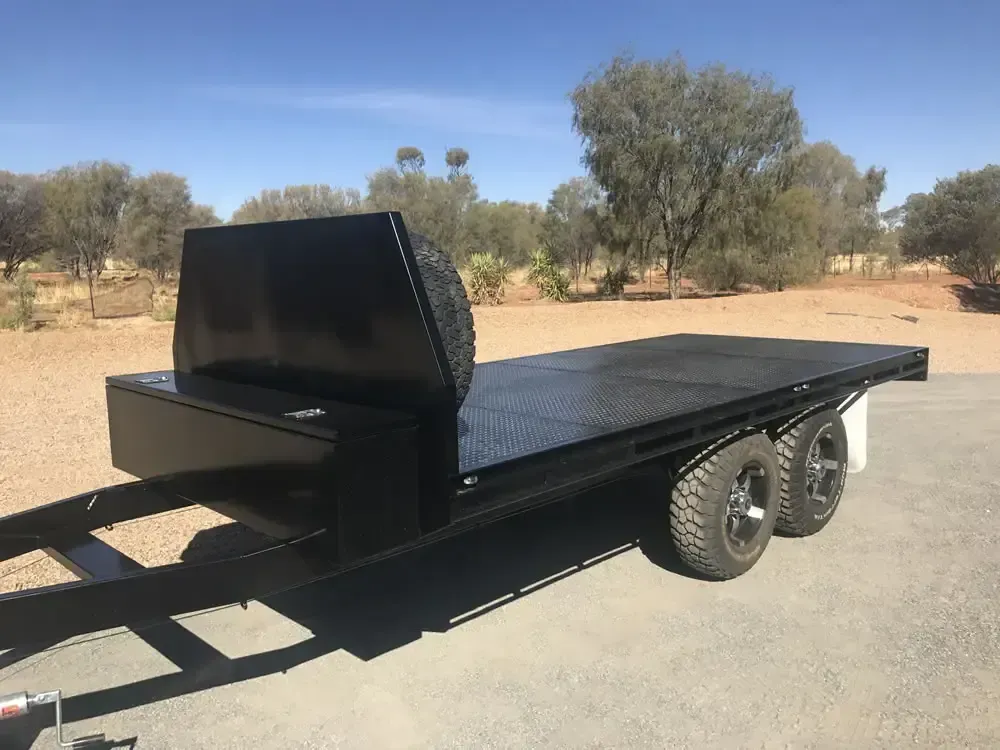
Black flatbed trailer with dual axles parked on a roadside in a dry, rural area
October 1, 2026
From finishes and heavy-duty suspension to rated tie-downs, BluedustNT breaks down the essential features you need.
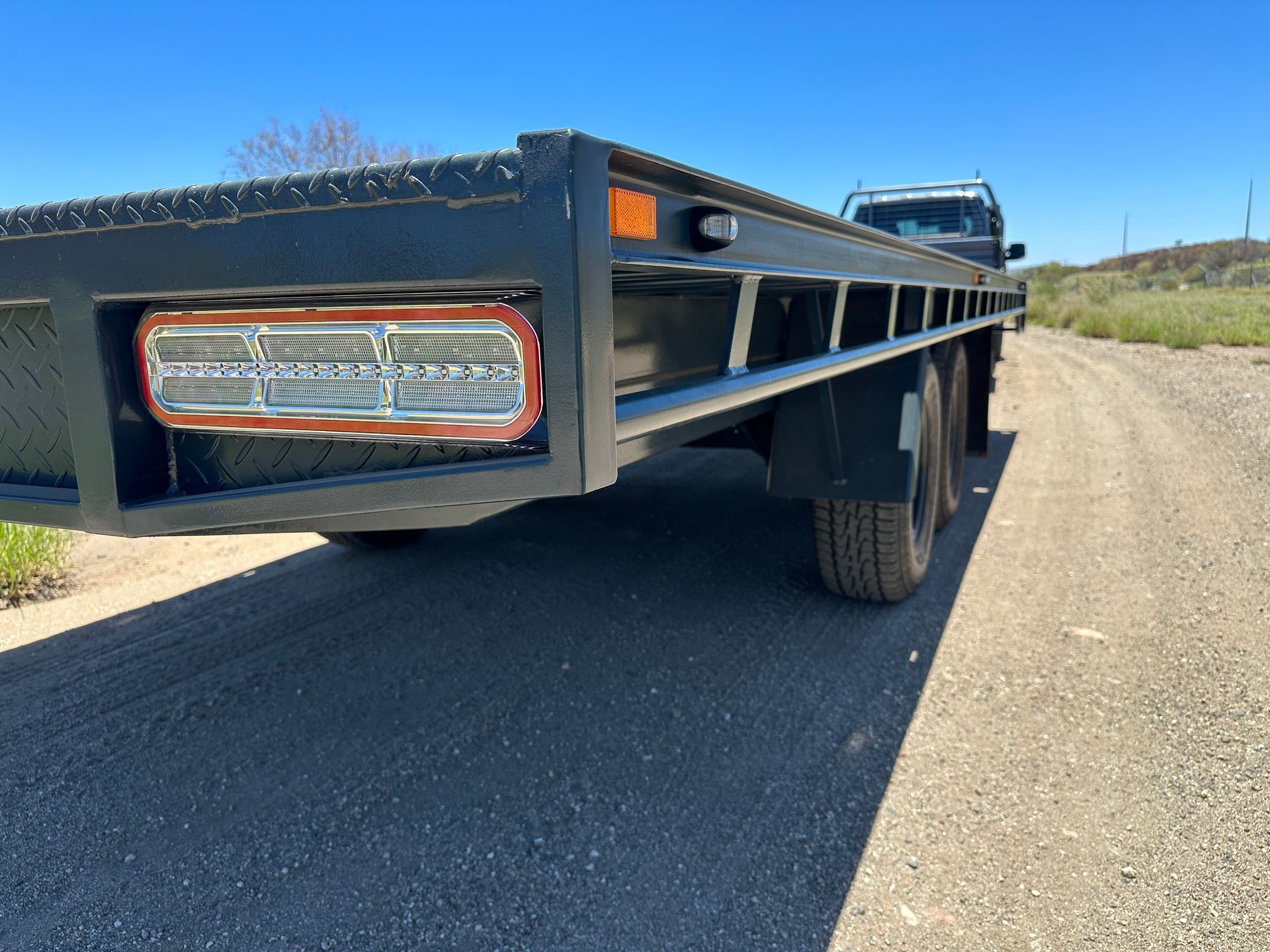
Black flatbed trailer parked on a rural dirt road, viewed from the rear corner
September 29, 2026
Off-the-shelf trailers rarely fit your exact gear. BluedustNT explains how custom tradesman, farm, and heavy-duty trailers maximise efficiency in the NT.
Show More